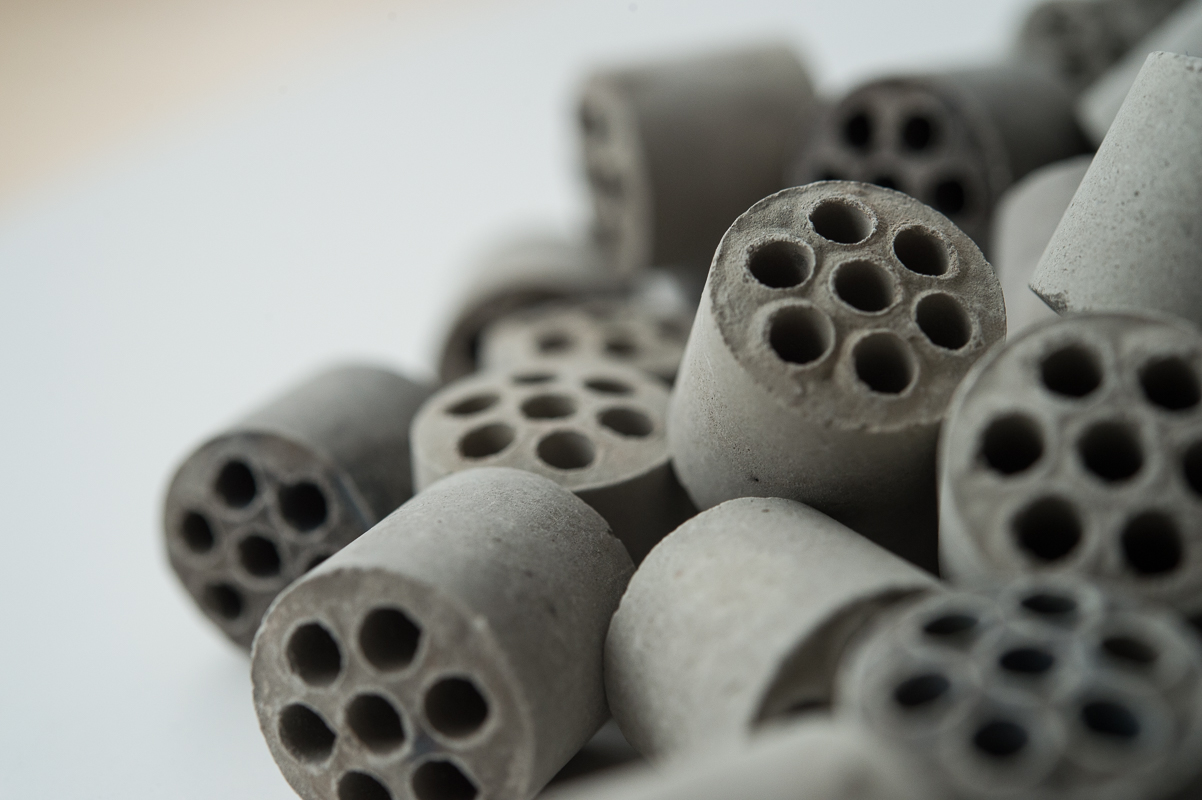
First stage reforming catalyst
Application
G-0217 (G-0217-7H/C, G-0217-7H/C/F) and G-0221 (G-0221-7H/C, G-0221-7H/C/F) series catalysts are designed for 1st stage steam reforming of natural gas in tubular reformers, in the processes of obtaining hydrogen or synthesis gases in the production of ammonia, methanol and other chemicals produced from hydrogen and carbon oxides.
Characteristics
The active ingredient in the G-0217 and G-221 series of catalysts is nickel deposited on an alkaline ceramic support. Deposition of nickel on the alkaline support increases the catalyst’s resistance to carbonization. The catalysts are supplied in oxide form. Obtaining the active form requires the reduction of NiO to Ni, carried out after loading in an industrial reformer. The catalysts are in the form of seven-hole cylinders with spun bases (G-0217-7H/C, G-0221-7H/C) and seven-hole cylinders with gouges and spun bases (G-0217-7H/C/F, G-0221-7H/C).
Operating parameters
- Temperature [°C]: 400 ÷ 900
- Pressure [bar]: up to 40
- H2O/Cmolar ratio: min. 2,3
Operational advantages
- developed geometric surface area, resulting in efficient heat transport to the catalyst,
- High activity and low pipe wall temperature,
- Very high mechanical strength, low dusting,
- Optimized grain sizes to allow uniform pipe loading.
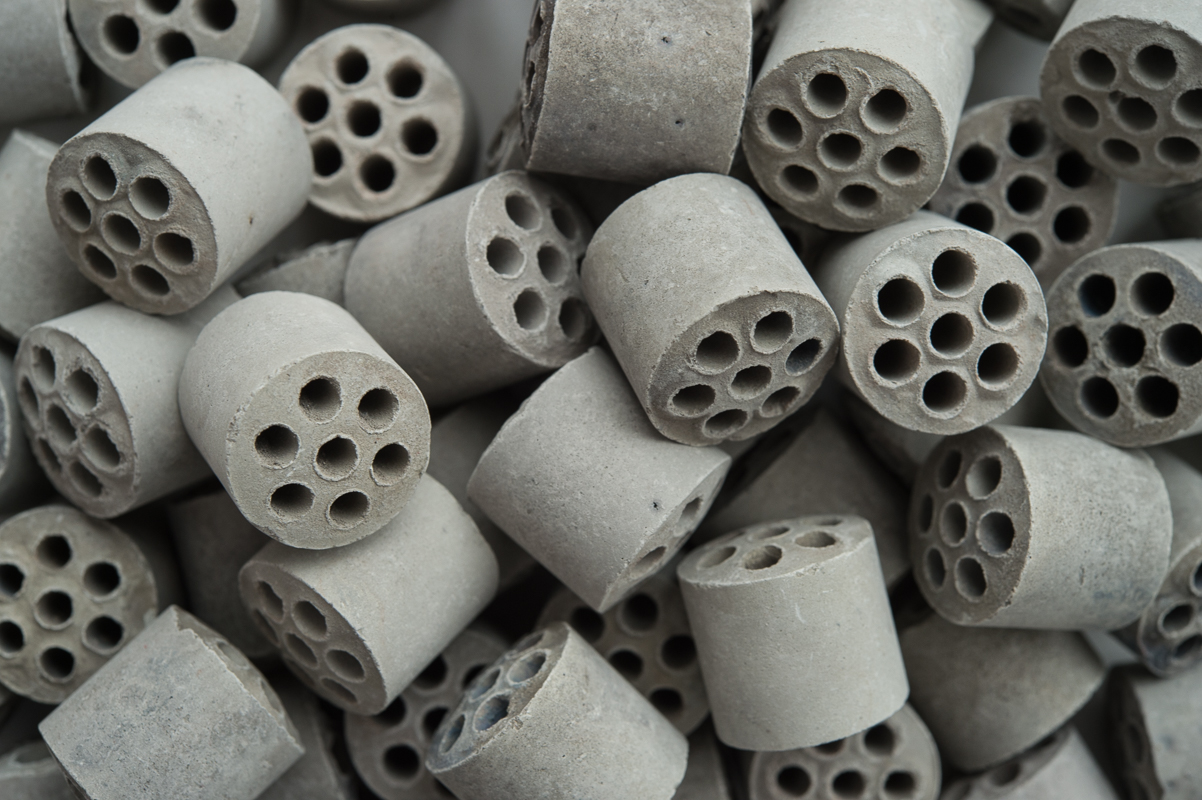
Second stage reforming and natural gas semi-combustion catalyst
Application
G-0210 series catalysts (G-0210-7H/C and G-0210-7H/C/F) and G-0205-7H/C are designed for 2nd stage steam reforming (so-called afterburning) of natural gas. The process of stage II reforming, depending on the purpose of the synthesis gas, is carried out with air and/or oxygen and steam to deeply convert hydrocarbons to synthesis gas. The catalysts are also designed for semi-combustion of natural gas with oxygen or air and steam.
Characteristics
The catalysts are supplied in oxide form. The active component of the catalysts is nickel (formed by the reduction of NiO to Ni carried out in an industrial reformer) deposited on an alkaline ceramic support. The catalysts are in the form of seven-hole cylinders with spun bases (G-0210-7H/C, G-0205-7H/C) and seven-hole cylinders with gouges and spun bases (G-0210-7H/C/F).
Operating parameters
- Temperature [°C]: 900 ÷ 1300
- Pressure [bar]: up to 40
- H2O/Cmolar ratio:
- min. 1 (for a semi-combustion reactor)
- min. 2.3 (at the inlet to the 1st stage reformer)
Operational advantages
- Developed geometric area, high activity,
- Very high mechanical strength, low dusting,
- Optimized grain sizes, uniform flow through the bed,
- Low resistance and low temperature gradients in the bed.