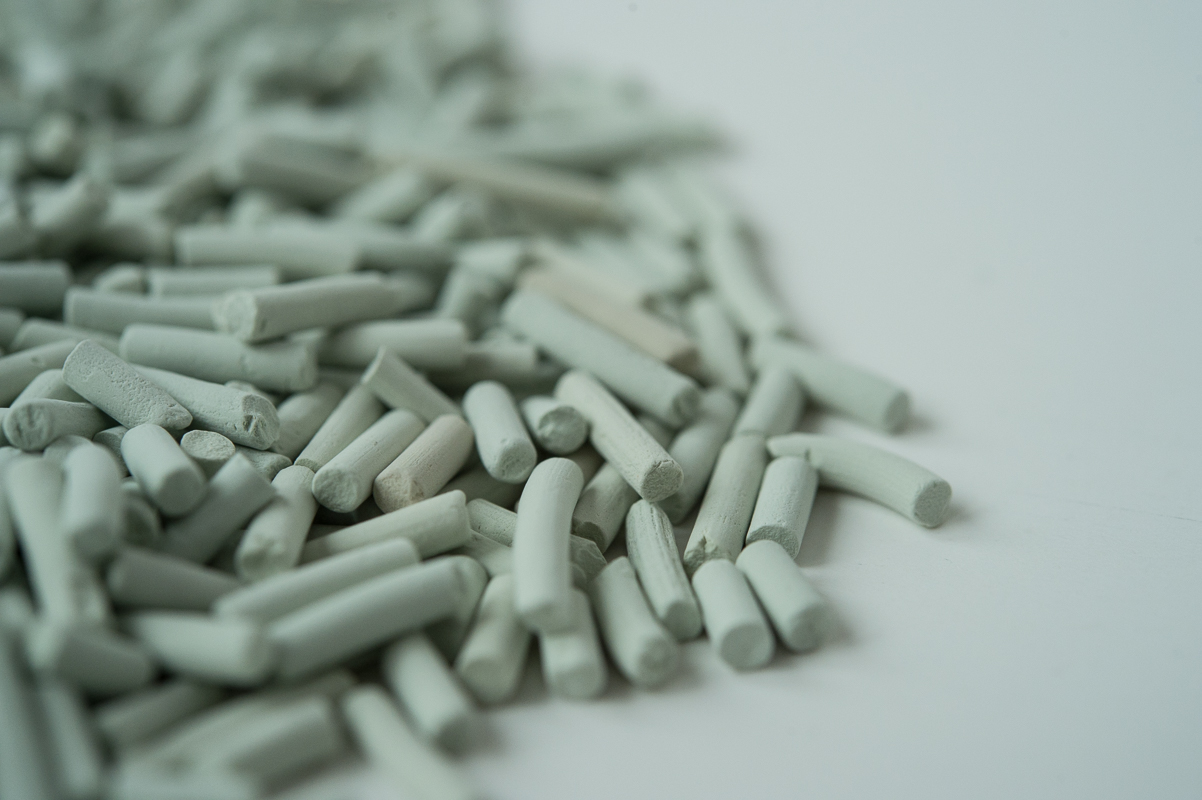
Catalyst for hydrogenation of organic sulfur compounds – PKH-3
Application
The PKH-3 catalyst is designed to hydrogenate organic sulfur compounds (HDS) contained in natural gas for conversion to hydrogen sulfide.
Characteristics
PKH-3 type Ni-Mo/Al2O3 catalyst is offered in the form of cylindrical extrusions with a diameter of 2.5 – 3 mm. The active component of the catalyst is mixed sulfides of nickel and molybdenum, so activation by sulfidation before operation is required. The catalyst is characterized by favorable properties, especially when applied to raw materials containing a relatively high amount of carbon oxides and unsaturated hydrocarbons.
Operating parameters
- Temperature [°C]: 200 ÷ 450
- Pressure [bar]: up to 50
- Hydrogen gas concentration [% mole]: 2 ÷ 5
- Gas load [h-1]:
- 1000 ÷ 5000 – operation under pressure
- 800 ÷ 1500 – non-pressure operation
Operational advantages
- high activity toward hydrogenation and, at the same time, low activity toward highly exoenergetic carbon monoxide methanation reactions,
- Resistance to occasional large temperature rises,
- high mechanical strength,
- Low, stable resistance to gas flow,
- The service life of the batches a minimum of 10 years.
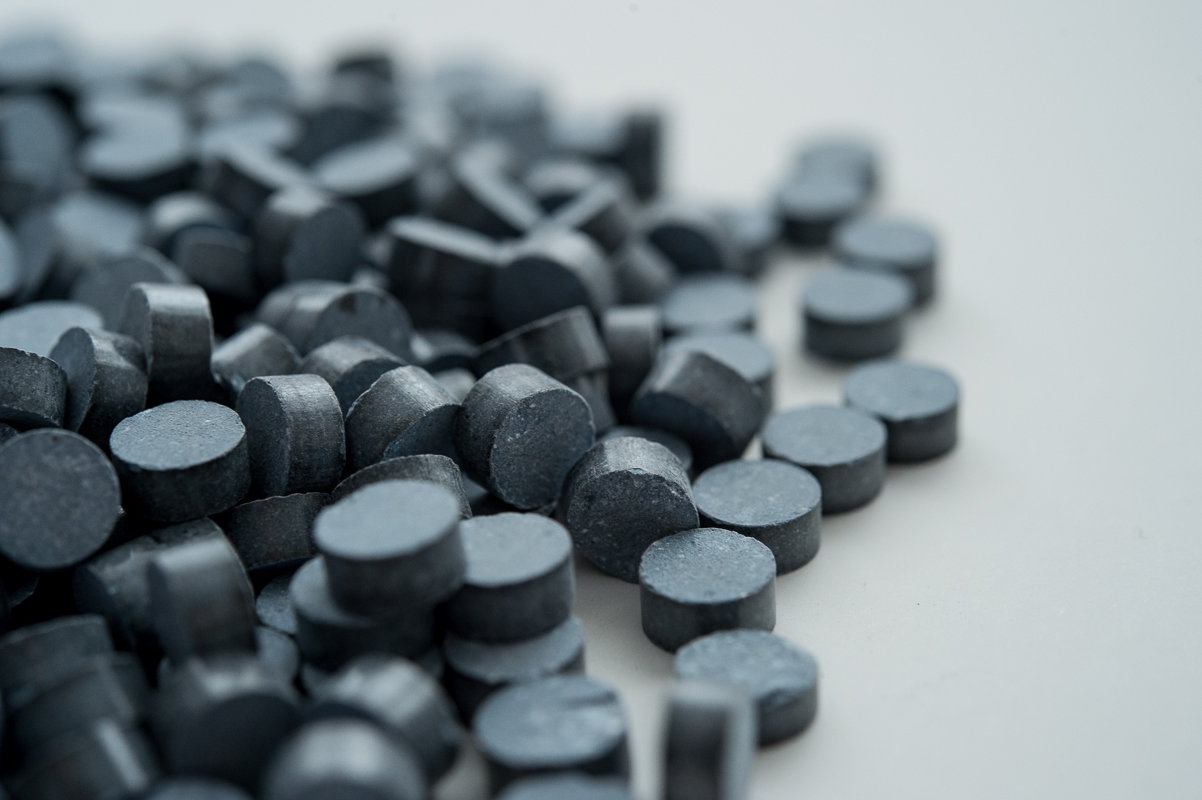
Zinc sorbent
Application
Zinc sorbents of the PSC and PSC-1E series are designed for the removal of hydrogen sulfide and reactive organic sulfur compounds from natural gas, refinery gases, gasoline, kerosene and other raw materials used to obtain synthesis gases in hydrogen, ammonia and methanol plants. They can be used in a desulfurization node both after a hydrodesulfurization reactor and as a stand-alone element for raw materials with a relatively low content of organic sulfur compounds.
Characteristics
PSC Series
The sorbent is supplied in the form of hydrozincite. After loading into the desulfurizer, it is necessary to activate it by gradually heating the charge at 240-260oCto about 300°C in a stream of natural gas or nitrogen. Decarbonization of the charge (with the release ofCO2) results in active zinc oxide. The sorbents are offered in the form of tablets with a diameter of 8 mm or 5 mm.
PSC-1, PSC-1E series
ZnO sorbent in active (decarbonized) form. The sorbents are offered as tablets (PSC-1) or extrusions (PSC-1E).
Operating parameters
- Temperature [°C]: 200 ÷ 400
- Sorption capacity [% wt S]: min. 30, depending on operating conditions
- Gas load [h-1]: not higher than 3000
Operational advantages
- High sorption capacity due to grain porosity and high ZnO content,
- High mechanical strength, low dusting during loading and operation,
- Low and stable pressure drop during operation.
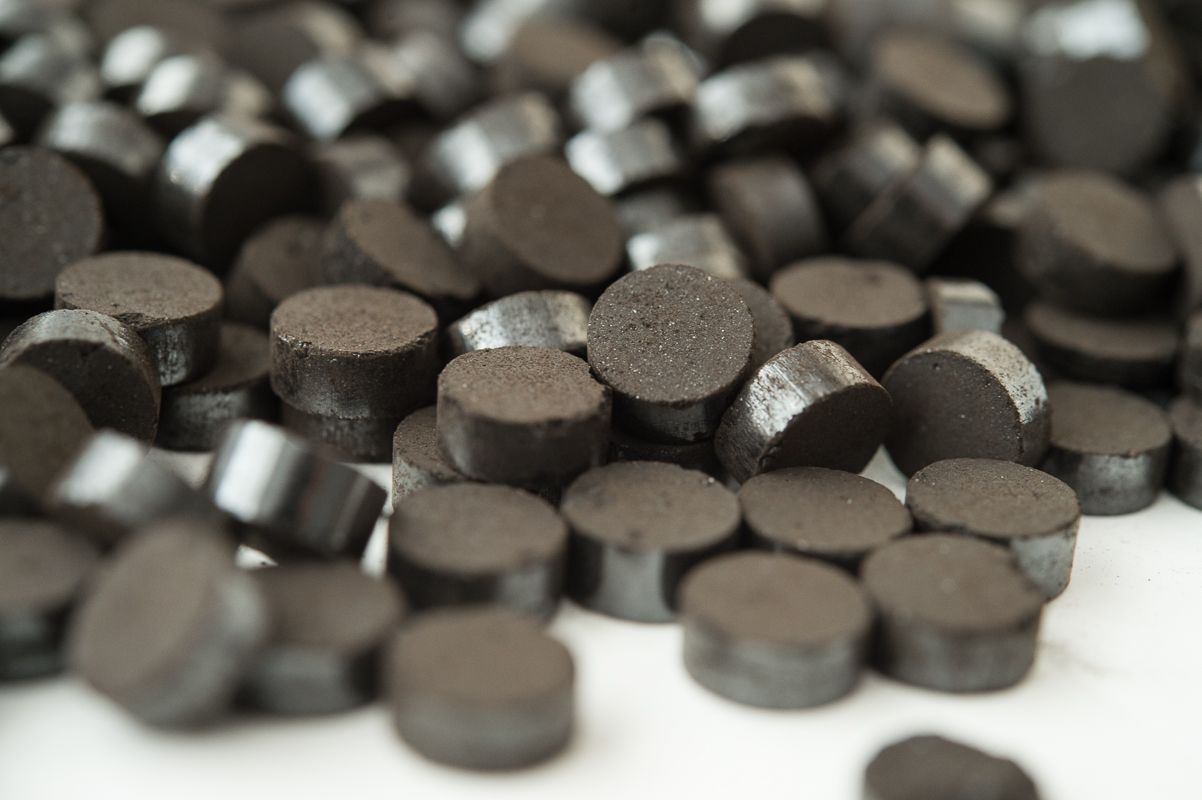
Zinc-copper sorbent
Application
PSMC copper-zinc sorbent is designed for the deep desulfurization process of hydrocarbon feedstocks used to obtain synthesis gases in hydrogen, ammonia and methanol plants. PSMC sorbent is used as a complement to PSC zinc sorbent.
Characteristics
The active components of the PSCM sorbent are metallic copper and zinc oxide – substances with high affinity for sulfur compounds. Hence, its activation is required before operation. PSCM sorbent plays a bifunctional role – it has catalytic properties towards hydrogenation of persistent organic sulfur compounds and at the same time effectively sorbs hydrogen sulfide. The sorbent is offered in the form of tablets with a diameter of 8 and 5 mm.
Operating parameters
- Temperature [°C]: 150 ÷ 250
- Pressure [bar]: up to 50
- Gas load [h-1]: usually not higher than 3000
Operational advantages
- eliminates the risk of residual sulfur compounds getting outside the desulfurization system in cases where there is no HDS catalyst in the desulfurization system or the concentration of sulfur compounds in the feedstock is too low to keep the HDS catalyst in active sulfide form, yet high enough to cause the loss of activity of the reforming and carbon monoxide conversion catalysts,
- low operating temperature (below 350°C),
- high mechanical strength,
- low dusting,
- Low and stable pressure drop during operation.